



2026 GMC Yukon vs Yukon XL: How to Choose
Browse Yukon Inventory Browse Yukon XL Inventory Get Pre-Qualified
The 2026 GMC Yukon and Yukon XL are the same full-size SUV in two lengths, so the choice comes down to how much room you need. They share a platform, an engine lineup, and the same trims and technology. The XL is the stretched version, adding length behind the rear axle for more cargo room and a roomier third row. For a growing family near Nashville or a contractor hauling gear around Mena, that extra space can be the deciding factor.
This page compares them on the differences that count: length, wheelbase, cargo, third-row space, fuel range, and price. Allen Tillery Buick GMC in Hot Springs stocks both body styles, and the easiest way to settle it is to sit in each one back to back. Narrow it down below.
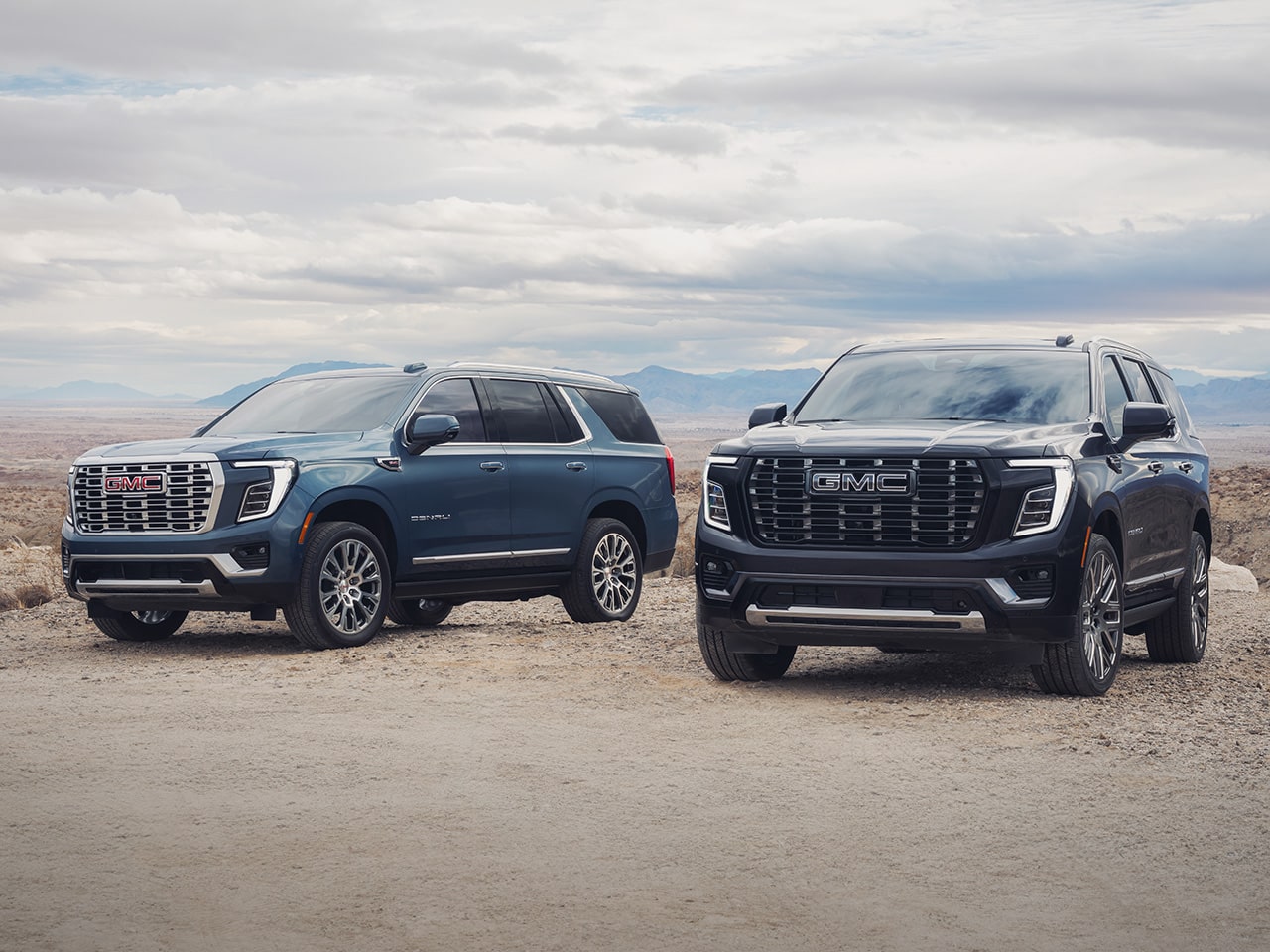
Yukon vs Yukon XL at a Glance
Here is how the two line up on the specs shoppers compare most. Both seat up to eight, and both share identical width, height, engines, and feature availability.
| Specification | 2026 GMC Yukon | 2026 GMC Yukon XL |
|---|---|---|
| Overall length | 210.1" | 225.2" |
| Wheelbase | 121.0" | 134.0" |
| Cargo behind third row | 25.5 cu ft | 41.5 cu ft |
| Max cargo (all rows folded) | 122.8 cu ft | 144.5 cu ft |
| Third-row legroom | Standard length | About 1.8" more (per Edmunds) |
| Fuel tank | 24.0 gal | 28.0 gal |
| Seating | Up to 8 | Up to 8 |
| Starting MSRP | $69,600 | $72,600 |
For a full trim-by-trim price walk on either body style, see the Yukon trims and pricing page. Starting MSRP excludes destination charges, taxes, and dealer fees.
How Much Bigger Is the Yukon XL?
The headline difference is length. The standard Yukon measures 210.1 inches, while the Yukon XL stretches to 225.2 inches. That is just over 15 inches more vehicle, almost all of it in the wheelbase, which grows from 121.0 to 134.0 inches. Both are the same width and height; the XL is simply longer.
In daily driving, the shorter Yukon is easier to park and maneuver. The XL's extra wheelbase means a wider turning circle and a longer body to place in tight spots, which matters for anyone squeezing into an older garage around Benton. The trade is that the longer wheelbase smooths out the highway ride on a run down Highway 8 toward Mena. If most of your driving is local and your garage is on the smaller side, the standard Yukon is the more livable size; if you log interstate miles hauling people and gear, the XL earns its footprint.
Cargo and Third-Row Space Compared
This is where the XL separates itself. Behind the third row, the standard Yukon holds 25.5 cubic feet of cargo, enough for a weekly grocery run or a few suitcases. The Yukon XL holds 41.5 cubic feet in the same spot, enough to leave the third row up for passengers and still fit everyone's luggage for a road trip to Millwood Lake. Fold everything flat and the Yukon opens up to 122.8 cubic feet, while the XL reaches 144.5 cubic feet.
The XL also adds roughly 1.8 inches of third-row legroom, according to Edmunds. That sounds small, but it is the gap between a third row adults tolerate on a short hop and one they accept for a longer drive. For families near Nashville or Arkadelphia who regularly fill all three rows with full-size passengers, the XL's back seat is the more comfortable place to spend a couple of hours. If your third row mostly carries kids or only gets used occasionally, the standard Yukon's space is plenty. For a deeper look at loading and seating on each body style, see the Yukon cargo and dimensions guide and the Yukon XL cargo and dimensions breakdown.
What the Yukon and Yukon XL Share
Mechanically, these two are twins. Both body styles offer the identical engine lineup, the same 10-speed automatic, and the same rear-wheel and four-wheel-drive choices, so neither costs you an engine option. The available Duramax turbo-diesel is on the menu for both. Towing is the one capability that shifts slightly, since the XL's added length and weight trim its maximum tow rating a touch below the standard Yukon when each is properly equipped. Exact horsepower, torque, fuel economy, and tow ratings live on the Yukon engine and towing specs page so you can compare configurations there.
Technology and safety are also shared across both. The same large infotainment screen, available Super Cruise hands-free driver assistance, Night Vision, head-up display, and rear-seat media options are offered on either body style at the equivalent trim. Because the equipment is identical, the decision really comes down to size, space, fuel range, and price. The full rundown is on the Yukon technology and safety page.
Price and Driving Range Differences
The Yukon XL runs about $3,000 more than the equivalent standard Yukon. The base Yukon Elevation starts at $69,600 and the Yukon XL Elevation at $72,600, with a similar gap up the trim ladder. That money buys space, not added power or features.
The XL also carries a larger fuel tank, 28.0 gallons versus 24.0 gallons in the standard Yukon. On long hauls toward Hope, that bigger tank stretches the distance between fill-ups. If your driving is mostly local, the standard tank is rarely a limitation. Browse current pricing on Yukon Denali models in stock or step up to Yukon XL Denali inventory to see what is on the lot.
Which One Should You Buy?
Choose the standard Yukon if: you want the more manageable size for parking and tight garages, your third row mainly carries kids or sees occasional use, and you would rather put the savings toward a higher trim. It still seats up to eight and swallows plenty of cargo with the seats folded. For most families around Malvern, the standard Yukon is the right amount of SUV.
Choose the Yukon XL if: you routinely fill all three rows with adults, you travel with luggage for a full house, or you need cargo room behind a raised third row. Buyers around Bryant who use their SUV as the family hauler tend to gravitate to the XL. The longer body is a fair trade for the space if you will use it.
Still on the fence? Drive both. The numbers narrow it, but sitting in the third row and loading your gear settles it. Compare live listings of the Yukon lineup and available Yukon XL SUVs, then read the Yukon research hub for the full picture.
Shop Both at Allen Tillery Buick GMC
Allen Tillery Buick GMC stocks the 2026 Yukon and Yukon XL in a range of trims, and our team will set both side by side so you can feel the difference. We have served the area since 1967. Visit us at 4573 Central Ave in Hot Springs, or call (501) 881-4160 to line up a back-to-back test drive.
Ready to dig into one body style? Read the Yukon overview for the standard SUV or the Yukon XL overview for the long-wheelbase version. The common Yukon questions page covers what buyers ask most, and you can start financing online with our pre-qualification form, with no impact to your credit.
Yukon vs Yukon XL FAQs
What is the difference between the GMC Yukon and Yukon XL?
The Yukon XL is a longer version of the standard Yukon. It measures 225.2 inches versus 210.1 inches, riding on a 134.0-inch wheelbase instead of 121.0 inches. The extra length adds cargo room behind the third row, 41.5 cubic feet versus 25.5, and about 1.8 inches of additional third-row legroom. Width, height, engines, trims, and technology are the same on both.
Is the Yukon XL worth the extra money over the Yukon?
The Yukon XL costs about $3,000 more than the equivalent Yukon trim. It is worth it if you regularly use the third row for adults or need cargo space behind a raised third row. If your third row mostly carries kids or your garage is tight, the standard Yukon is the better value.
Do the Yukon and Yukon XL have the same engines?
Yes. Both body styles offer the identical engine lineup, including the available Duramax turbo-diesel, paired with a 10-speed automatic and a choice of rear-wheel or four-wheel drive. See the Yukon engine and towing specs page for horsepower, torque, and tow ratings by configuration.
How much more cargo does the Yukon XL have?
Behind the third row, the Yukon XL holds 41.5 cubic feet versus 25.5 in the standard Yukon. With all rows folded, the XL reaches 144.5 cubic feet versus 122.8. The XL also has a larger 28.0-gallon fuel tank compared with 24.0 gallons.
Does Allen Tillery Buick GMC have both the Yukon and Yukon XL in stock?
Allen Tillery Buick GMC stocks both the 2026 Yukon and Yukon XL across multiple trims. You can browse current inventory online or call (501) 881-4160 to arrange a side-by-side test drive of both body styles.

May not represent actual vehicle. (Options, colors, trim and body style may vary)
The Manufacturer's Suggested Retail Price excludes tax, title, license, dealer fees and optional equipment. Dealer sets final price.